© All rights reserved. Powered by Techronicler



When AI Speaks First: Confidence, Leadership and the Human Skills We Can't Afford to Lose
There’s a pattern emerging in workplaces that nobody is talking about loudly enough. Leaders who used to trust their instincts are now routinely deferring to AI before they’ve even formed a thought. Professionals who once drafted their own communications, built their own arguments, and trusted their own judgement are outsourcing those moments to a machine. And quietly, almost gradually, confidence is eroding.
This isn’t a criticism of AI. The technology is remarkable and, used well, genuinely transformative. But there’s a difference between using AI as a tool and using it as a crutch. And right now, in workplaces across every sector, many people are doing the latter, often without realising it.
The outsourcing trap
Think about the last time you opened an AI tool before you’d fully thought something through.
Maybe it was a tricky email, a presentation structure, or a decision you were wrestling with and there’s nothing inherently wrong with any of that. But if the AI’s answer becomes your answer without much interrogation in between, something important is being quietly bypassed: your own judgement.
Confidence isn’t built in moments of ease, it’s built through the accumulation of small acts of trusting yourself, forming a view, testing it, getting it wrong sometimes, and learning from it.
When we skip that process repeatedly, we lose the habit of thinking independently, and we start to doubt whether we ever could.
Psychologist Daniel Kahneman describes two systems that shape how we think and make decisions. System one is fast, automatic, and intuitive, it’s efficient, but it relies on shortcuts and is prone to errors. System two is slower and more deliberate and it weighs evidence, considers alternatives, and is where clearer, more rational decisions get made.
The challenge is that most of us spend the majority of our time in System one mode, especially when we’re tired or overwhelmed, and that’s precisely when we’re most vulnerable to reaching for AI before engaging our own thinking. The shortcut feels productive, but over time, it will impact how we think.
For leaders, this is especially significant as the people around you are watching how you engage with AI. If you model uncritical adoption, don’t be surprised when your teams stop bringing their own thinking to the table. Confidence, like so much in leadership, is contagious.
The reframe HR leaders need to hear
AI, when used intentionally, doesn’t erode confidence at all. It can actually help build it.
When someone uses AI to stress-test their thinking rather than replace it, to pressure-check an argument they’ve already formed, or to explore perspectives they hadn’t considered, something different happens. They engage more deeply with their own point of view and get better at articulating it. They also become more confident, not less, because the thinking is still fundamentally theirs.
The question for HR leaders isn’t whether your people are using AI because they are, and they should be. The question is whether they’re using it in a way that develops them or hinders them.
That distinction matters enormously for talent development, for psychological safety, and for the long-term capability of your organisation.
Where confident leadership comes in
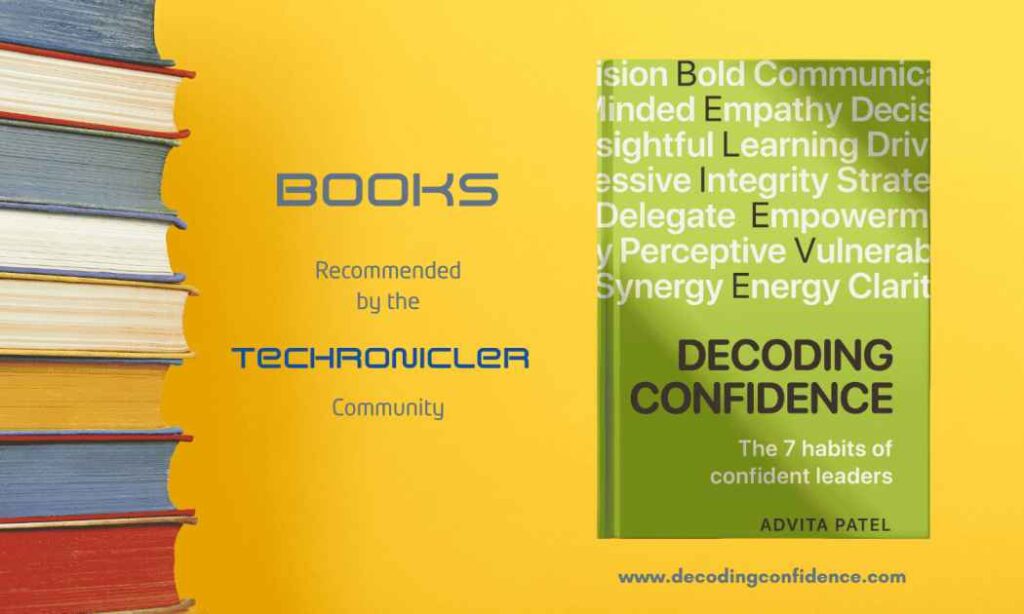
Through my work coaching leaders and research, I’ve developed the BELIEVE framework, seven habits that build the kind of confidence that sustains people through challenge and change and two of them feel especially relevant in the context of AI.
The first is learning because confident leaders treat every experience as information, including their encounters with AI. They ask what the tool can teach them, where it falls short, and what their own judgement adds that the algorithm can’t. They don’t forfeit the learning process; instead, they use every resource available, including AI, to deepen it.
My own research found that 71% of people said genuine feedback from managers made the biggest difference to their confidence. That finding matters here too, because no AI tool replicates the impact of a real leader who invests in someone’s growth. The human element of development isn’t a nice-to-have; it’s where confidence actually gets built.
The second is Integrity as this habit is about aligning what you say with what you actually think.
In a world where AI can generate polished, plausible-sounding content on demand, integrity means knowing the difference between your voice and a generated one. It means being willing to say “this is what I actually believe” rather than defaulting to whatever sounds most coherent on the screen.
These aren’t abstract behaviours but practical habits that HR leaders can model, develop, and embed in their organisations right now.
What this means for your organisation
If you’re responsible for people’s development, there are some honest questions worth considering.
Are your leadership development programmes helping people build genuine confidence, or just competence with tools?
Are your managers developing the self-awareness to notice when they’re outsourcing their thinking?
Are you creating enough space for people to be wrong, to learn, and to build the kind of resilient confidence that doesn’t crumble the moment the technology changes?
AI is here to stay, and it will keep evolving faster than any training programme can keep up with.
The organisations that will navigate that well aren’t the ones with the most sophisticated AI stack. They’re the ones whose people are confident enough to think critically, speak honestly, and lead with judgment that no algorithm can replicate. That’s the advantage we have, and it’s worth protecting at all costs.
Decoding Confidence: The 7 Habits of Confident Leaders by Advita Patel
Available on Amazon and all major book sellers.


Advita Patel is an award winning business communications consultant and professional confidence expert. She is the founder of CommsRebel, a consultancy supporting organisations to build inclusive, high performing workplace cultures, and the co-founder of A Leader Like Me, an international agency focused on inclusive leadership and employee experience. Advita is the host of the Decoding Confidence podcast, which explores confidence at work through honest conversation and practical insight. Her forthcoming book, Decoding Confidence, will be published in May 2026. An international speaker and award winning podcaster, Advita regularly speaks on confidence, leadership, inclusion, and communications. In 2025, she was the President of the Chartered Institute of Public Relations in 2025.
If you wish to showcase your experience and expertise, participate in industry-leading discussions, and add visibility and impact to your personal brand and business, get in touch with the Techronicler team to feature in our fast-growing publication.
Individual Contributors:
Answer our latest queries and submit your unique insights:
https://bit.ly/SubmitBrandWorxInsight
Submit your article:
https://bit.ly/SubmitBrandWorxArticle
PR Representatives:
Answer the latest queries and submit insights for your client:
https://bit.ly/BrandWorxInsightSubmissions
Submit an article for your client:
https://bit.ly/BrandWorxArticleSubmissions
Please direct any additional questions to: connect@brandworx.digital