© All rights reserved. Powered by Techronicler



In Conversation with
A Techronicler interview with Vidhi Jain, Aerospace Engineer

Techronicler: Thank you for joining us, Vidhi! Please share with our audience a little bit about yourself, focusing on your experience in tech + what you currently do for work (and passion projects!)
Vidhi Jain:
I’m an aerospace engineer exploring the intersection of space technology, AI, and emerging computing. Through the REYES Program run by the University of California, Berkeley, I joined a global SGAC-AIxSpace research project on AI-powered space mission risk prediction, where I led the Technical Frameworks track and developed machine learning systems for real-time mission failure detection. My work has also included Mars-related research connected with ISRO, gravitational wave astronomy projects, and side projects ranging from AI-driven water governance to assistive technology. Right now, I’m focused on building toward a future in deep-tech research and startup ecosystems while continuing to learn, build, and experiment across disciplines.
Techronicler: What is some advice you want to give to other young-in-their-industry AAPI women entering the tech space? / What advice would you give to your younger self entering tech?
Vidhi Jain:
You do not need to be an expert before you start. I came into tech without a computer science background and I’m still learning while doing research and projects I genuinely care about. A lot of people think they need permission, credentials, or mastery before entering a field, especially interdisciplinary spaces like AI, aerospace, or astrophysics, but most growth happens by starting before you feel fully ready.
And one more thing nobody tells you: you do not have to tone yourself down to be taken seriously. In fields like astrophysics and tech, there’s often an unspoken pressure to dress differently, act less casually, or become quieter so people focus on your work. I spent time worrying about that. It wasn’t worth it. The right people take your work seriously because of the work itself, not because you made yourself smaller to fit into the room.
Techronicler: How has Rewriting the Code helped you in your tech journey?
Vidhi Jain:
Rewriting the Code gave me a sense of community at a point when most of my work happened in spaces where I was often one of very few women. Being surrounded by people building ambitious things while still figuring things out themselves made tech feel far less isolating. It also opened doors to opportunities and networks I may not have discovered otherwise. More than anything, it made me feel like I belonged in technical spaces even while still learning and exploring my path.
Techronicler: Everyone has an origin story! What was the first piece of technology you ever broke, built, or fell in love with?
Vidhi Jain:
One of the earliest projects that made me feel truly connected to aerospace was working on a hydro rocket project in my first semester of engineering. It sounds simple compared to the work I do now, but at the time, being part of a team trying to build one of the largest hydro rockets we could manage taught me an incredible amount about experimentation, failure, teamwork, and how exciting it feels to see something you built actually launch. That experience made aerospace feel real to me for the first time.
Later, building a CubeSat prototype using Arduino-based environmental sensors and working on robot soccer systems strengthened that feeling even more. I had always loved ideas and problem-solving, but those projects made engineering tangible instead of theoretical. That was probably when I realized I genuinely loved building complex systems and exploring how technology can interact with the real world.
Techronicler: A lot of careers/journeys look like straight lines on LinkedIn. How was yours different? Was there a pivotal moment or ‘happy accident’ that actually steered you toward your current role or niche?
Vidhi Jain:
On paper, my path probably looks fairly linear: aerospace degree, internships, research projects, conferences. In reality, most of my best opportunities came from applying to things I wasn’t fully sure I was qualified for. I started learning coding seriously only after I was already involved in research, and much of my journey has come from continuously learning while building rather than waiting until I felt fully prepared.
The ISRO internship was the turning point for me. Not because of the name, but because it showed me I could enter an unfamiliar problem space, learn quickly, and still contribute meaningfully. After that, I stopped seeing interdisciplinary work as intimidating. Even while learning new skills or entering completely new spaces, I kept applying, building, and exploring anyway. A lot of where I am today came less from having a perfect roadmap and more from consistency, curiosity, and a constant hunger to contribute to something bigger than myself.
Techronicler: If you were given $10M to start a company today in a niche outside of your current field, what problem would you solve?
Vidhi Jain:
I would work on water access and governance systems, particularly for regions facing long-term water stress. I previously worked on JalSakhi, an AI-driven water governance solution developed during a hackathon in Rajasthan, and the problem stayed with me long after the competition ended. A lot of water crises are not caused by lack of technology but by fragmented infrastructure, poor data systems, and inefficient distribution. I think there’s huge potential in combining AI, local governance, and accessible technology to make water systems more predictive, transparent, and equitable.
Techronicler: What is a piece of ‘common wisdom’ in the tech industry that you completely disagree with?
Vidhi Jain:
I disagree with the idea that you need to reach some advanced or “expert” level before you deserve to work in tech. A lot of people delay starting because they think everyone else already knows more than they do. I’ve learned most of my technical skills while actively building projects, doing research, and collaborating with people from very different backgrounds.
I also think people unnecessarily separate fields. I know people in computer science who love aerospace but think they can’t enter the space industry, and people interested in physics who feel intimidated by tech because they are not “real coders.” I think interdisciplinary careers are becoming increasingly important, and curiosity matters far more than fitting perfectly into one predefined label.
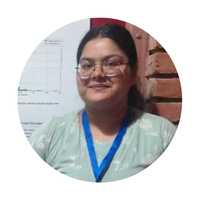
Vidhi Jain is an aerospace engineering graduate working at the intersection of space systems and AI, focused on real-time failure detection and space environment analysis. She speaks to what it means to fight for representation not just by gender, but by geography, advocating for women from non-traditional regions breaking into deep-tech.