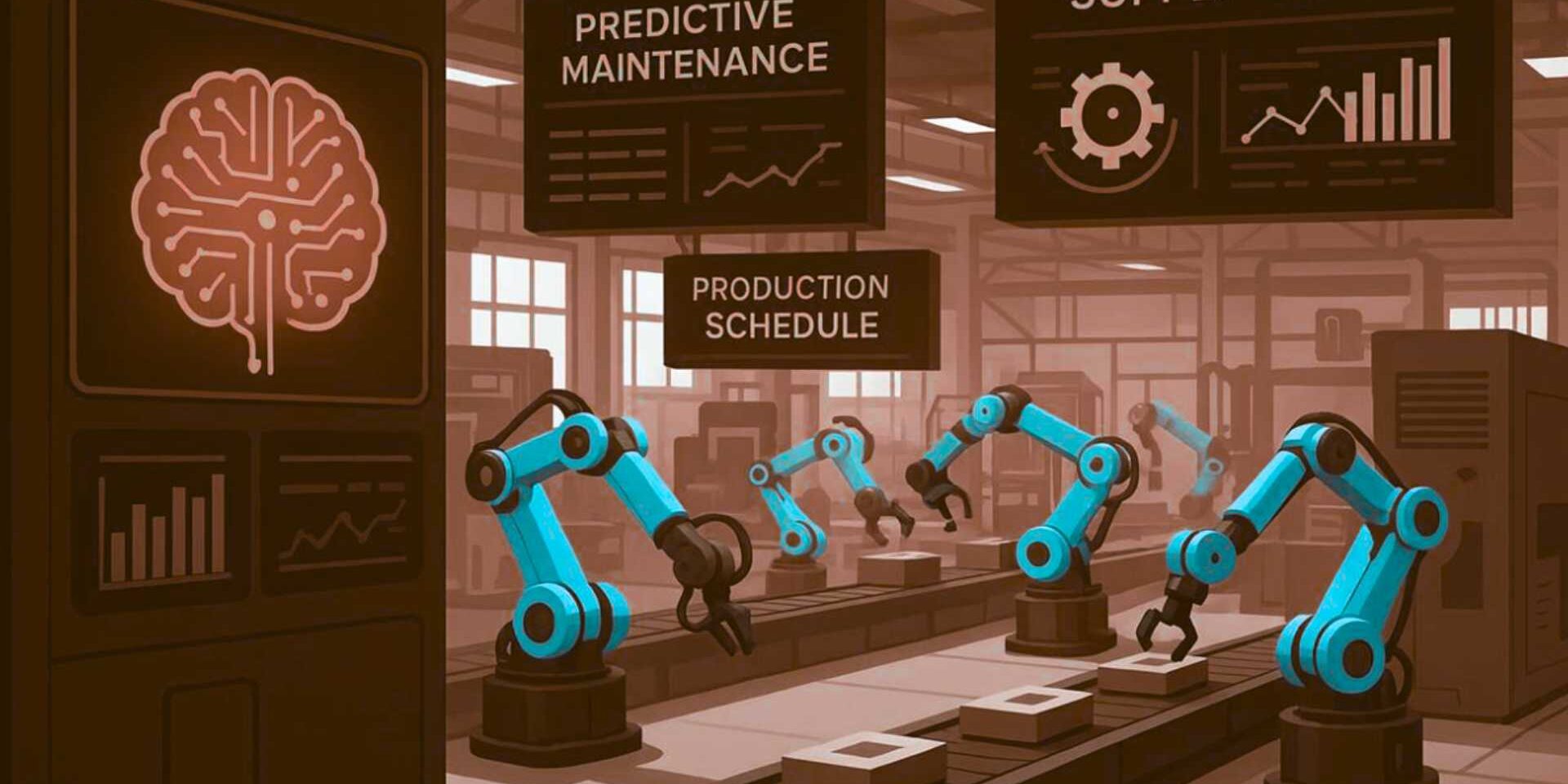
Coding Fast, Building Slow: The Manufacturing Bottlenecks Stalling Robotics

In the relentless march toward smarter factories, why does robotics innovation often feel like it’s grinding gears—stuck between lightning-fast code breakthroughs and the sluggish churn of physical production?
As algorithms evolve at breakneck speed, outdated workflows, supply chain snarls, and hardware delays threaten to leave hardware trailing far behind, raising questions about whether the industry can truly automate without first overhauling its own foundations.
On Techronicler, astute business leaders, visionary thought leaders, and hands-on tech professionals dissect these persistent hurdles, from factory inertia rooted in legacy training to precision component shortages and memory bandwidth bottlenecks that cripple real-time processing.
Yet, they also spotlight resilient paths forward: embracing simulation-first development, modular architectures, hardware abstraction layers, and standardized components to decouple software’s agility from manufacturing’s pace.
Their strategies reveal how robotics can surge ahead, turning potential pitfalls into platforms for seamless integration and sustained progress.
Explore these expert blueprints for bridging the divide.
Read on!
Factory Inertia, Not Tech, Slows Robotics Adoption
In my experience, the slowdown in robotics innovation is not caused by algorithms, the hardware or the technology itself.
The primary barrier is the inertia inside manufacturing plants.
Many facilities remain locked into processes designed for a different era and those workflows cannot be easily converted to automated processes and operations.
The issue is that retooling doesn’t require only new machines, but it demands a revised production logic with a mix of mechanical expertise, digital systems fluency and AI literacy.
However, much of the workforce is trained in legacy methods. The result is a disconnect between what robotics can deliver and what factories are prepared to absorb.
To move past that inertia I advise clients that adoption of robotics needs to be treated as a transformation programme rather than a simple upgrade.
The programme needs to consider
– targeted upskilling of staff in their manufacturing plant
– cross functional teams that blend IT engineers with shop floor veterans and
– the physical incorporation of the new robotic systems.
A structured change management methodology such as ADKAR can make the difference, ensuring that both people and processes evolve with the same pace as the machines themselves.

Nikos Apergis
Principal Consultant & Founder, Alphacron
Flexible Software and Modularity Overcome Hardware Delays
In my opinion, the biggest manufacturing lag slowing down robotics innovation today is the hardware bottleneck, especially around precision components, specialized sensors, and supply chain fragility.
It appears like a software problem from the outside, but it is not really that simple because even the smartest algorithms are useless if the robot cannot source reliable actuators or high quality parts at scale.
I still remember visiting a robotics lab where the team had breakthrough motion planning software, but they were stuck waiting eight weeks for a specific harmonic drive.
Their models were ready to ship, their code was world class, but the hardware pipeline moved at the speed of an industrial glacier.
What I believe is that the industry keeps its software edge by doubling down on modular architectures, simulation first development, and hardware abstraction layers that reduce dependency on any one component.
To be really honest, teams that build flexible software that can adapt to multiple sensors, multiple motors, and multiple form factors win because they are not held hostage by supplier delays.
We really have to see a bigger picture here. Robots advance fastest when hardware constraints stop dictating software timelines, and the way to do that is to build software that thrives even when manufacturing cannot keep up.

Decouple Code, Conquer Hardware Delays
The biggest drags are hardware realities: component lead times, safety approvals, and integration across mixed fieldbuses.
Servo drives still face STO (safe torque off) and EMC (electromagnetic compatibility) testing that adds months. Thermal limits force derating, which breaks optimistic cycle-time models.
To keep a software edge, decouple code from hardware. Use a HAL (hardware abstraction layer) with standard motion profiles like CiA 402 (drive profile) over EtherCAT (real-time Ethernet). Build with HIL (hardware-in-the-loop) to validate control loops before parts arrive.
Standardize drive footprints and power rails to swap vendors.
Add telemetry and versioned parameters for fast tuning and rollback.

Rene Ymzon
Marketing Director, Advanced Motion Controls
3D Print Tools, Version Control Cells
The drag is hardware iteration and integration.
Custom end-effectors, jigs, and ESD-safe nests still wait on machined parts, so cells idle.
Tolerance drift and poor material control also hurt repeatability in fixtures. Too many shops lack a digital thread for traceability across prints, robot configs, and QA.
To keep a software edge: shorten the mech loop and instrument it. Print EOAT and fixtures overnight in PA/CF or TPU, with hardened nozzles and dried material. Use enclosed, heated builds and acceleration tuning to hold dims. Treat cells like software: version control robot code and slicer profiles, log prints via APIs, and run CI-style approvals.

Ruben Nigaglioni
Marketing Director, Raise3D
Simulation Preserves Speed While Hardware Lags
The greatest hurdle in manufacturing that is holding back robots is the difference between how fast software can iterate compared to how slow hardware can be manufactured.
After spending a number of years creating AI-powered systems, I have witnessed the dramatic speed in which autonomy models, perception stacks and control algorithms can advance, sometimes on a weekly basis.
Hardware just doesn’t iterate that well. Be it actuators or sensors or uniquely tailored mechanical assemblies, lead times can stretch for months on end, and one part that is delayed can stall the entire prototype cycle.
On the other hand, what’s enabling the industry to keep its swagger in software speed is a capability of simulation-first development.
Teams are using AI-enhanced digital twins to iterate into thousands of edge cases even before the physical robot hits the factory floor.
Software speed stays high even while hardware sits in a shipping container somewhere.
Meanwhile, there is also a move toward modular and standardized hardware platforms.
Swappable components offer robotics teams some of the same advantages that software engineers have— applying parts instead of hugely re-engineering entire systems at each iteration.

Kevin Baragona
Founder, Deep AI
Modular, Standard Hardware Frees Software to Advance
The biggest manufacturing lag slowing down robotics innovation is that the hardware is too rigid, bespoke, and expensive compared to the software.
You can write a complex, brilliant piece of new AI code overnight, but it takes six months and a fortune to design, tool, and mass-produce a physical component that can reliably use that code.
The bottleneck is the messy reality of the physical world.
The industry can maintain its software edge by fundamentally changing how it approaches hardware design.
It needs to shift from custom-built, fixed components to universal, modular architecture.
If every new robot design requires a brand new motor, a new chassis, and new tooling, the software gains are irrelevant because the physical cost and time required to deploy the innovation are too high.
The real key is separating the hardware development from the software.
Robotics needs core, standardized hardware platforms that are generic and cheap—like a universal chassis or standardized joints—so that the software companies can focus entirely on advancing the code.
This will speed up deployment, lower the cost of failure, and allow the pace of physical innovation to finally match the speed of digital innovation.

Flavia Estrada
Business Owner, Co-Wear LLC
Supply Chain Bottlenecks Slow U.S. Robotics Production
Lag #1: Supply chain and component bottlenecks
Many robot systems depend on precision sensors, servo motors, and advanced materials from a handful of suppliers.
One analysis found that in the U.S., robotics production is hampered because critical parts are made overseas, limiting scale and raising cost.
Without reliable, cost-effective manufacturing of hardware, robotics roll-outs slow.
Rigid, Costly Hardware Limits Robotics; Standardize Components
From where I sit running an HVAC business in San Antonio, the biggest manufacturing lag slowing down robotics is the simple issue of hardware rigidity and cost.
The software side of robotics is getting cheaper and smarter every day—the programming can adapt quickly.
The problem is that the physical robot arm or the specific components, like sensors and motors, are expensive to produce, slow to redesign, and are often tied to specific, inflexible factory tooling.
This slow, high-cost manufacturing process can’t keep up with the speed of software innovation.
The whole robotics industry is dealing with the same classic problem we face in HVAC: a lack of modularity.
You can have amazing new diagnostic software, but if you need a specialty sensor that takes three months to ship and costs a fortune because it has to be custom-made for one machine, you’re stuck.
The manufacturing side needs to standardize components, making them interchangeable and affordable, allowing robotics companies to quickly swap out hardware to match their constantly evolving software.
To maintain that software edge, the industry needs to focus on making the software platform-agnostic and accessible.
Look at our business: the best software lets us use the same scheduling and routing logic whether we’re servicing an old furnace or a brand-new heat pump.
Robotics needs to do the same.
The focus should be on creating universal control software that can adapt to many different kinds of hardware from various manufacturers.
This way, the software innovation isn’t trapped waiting for a physical part to catch up; it just makes every existing robot smarter.

Memory Bandwidth Crushes Real-Time Robotics
The biggest manufacturing lag isn’t about parts—it’s memory bandwidth.
I’ve spent 15 years solving data bottlenecks, and robotics hits the same wall we see in AI: vision systems and real-time decision-making algorithms generate massive data streams that local processing can’t handle fast enough.
We proved this with Swift’s payment anomaly detection platform.
Their AI models needed to process transaction patterns 60x faster than their hardware allowed.
By pooling memory externally and routing only critical data to local processors, we cut their processing time from hours to minutes—the same concept applies to robotic vision systems trying to identify defects at production speed.
The software edge survives when you stop cramping algorithms into fixed memory boxes. At Kove, we’ve seen clients reduce server power consumption by 54% while increasing performance because their code isn’t constantly waiting for memory swaps.
Robotics manufacturers should architect systems where the robot’s “brain” can tap into datacenter-scale memory pools for training and adaptation, not just what fits on the factory floor unit.
Think of it like this: your robot doesn’t need to remember every possible scenario locally—it needs fast access to collective intelligence when edge cases appear.
We’re already doing this for Red Hat’s ML workloads with 9% latency improvements despite using external memory.

John Overton
CEO & Founder, Kove
On behalf of the Techronicler community of readers, we thank these leaders and experts for taking the time to share valuable insights that stem from years of experience and in-depth expertise in their respective niches.
If you wish to showcase your experience and expertise, participate in industry-leading discussions, and add visibility and impact to your personal brand and business, get in touch with the Techronicler team to feature in our fast-growing publication.
Individual Contributors:
Answer our latest queries and submit your unique insights:
https://bit.ly/SubmitBrandWorxInsight
Submit your article:
https://bit.ly/SubmitBrandWorxArticle
PR Representatives:
Answer the latest queries and submit insights for your client:
https://bit.ly/BrandWorxInsightSubmissions
Submit an article for your client:
https://bit.ly/BrandWorxArticleSubmissions
Please direct any additional questions to: connect@brandworx.digital
Answer a Query
You may also like