© All rights reserved. Powered by Techronicler



When Expertise Meets Automation: What to Watch Before Applying AI to Specialized Professions
By Stanley Anto
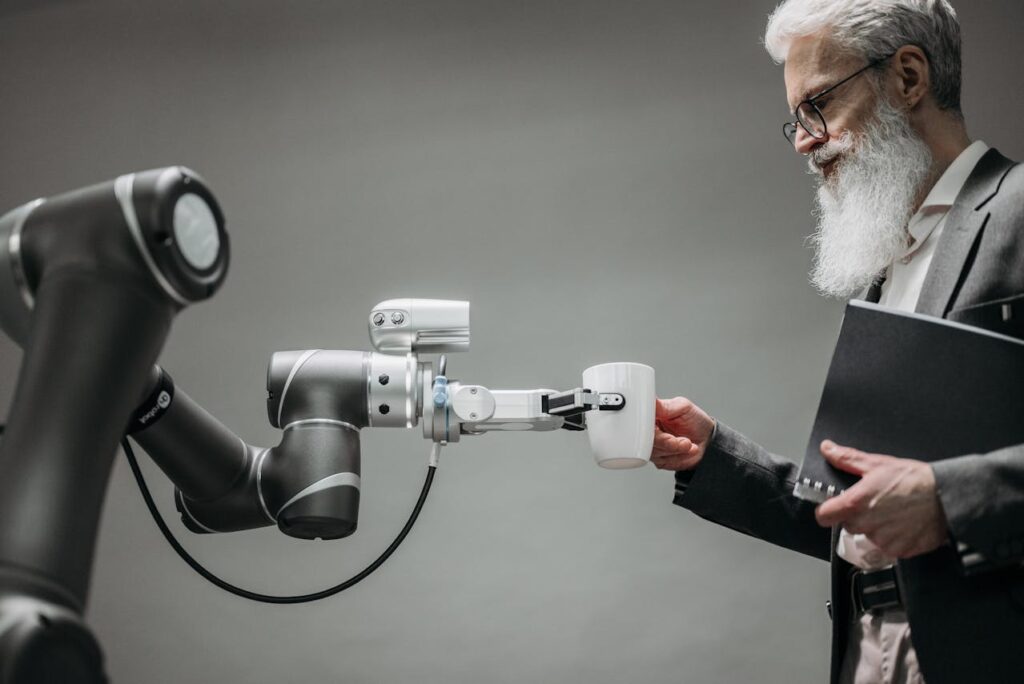
AI has moved quickly from experimentation to execution. Maybe too quick?
In 2026 and beyond, it’s no longer about whether AI will be used in specialized fields, but how carefully it’s applied.
While AI excels at pattern recognition, speed, and scale, specialty professions operate in environments where nuance, judgment, and accountability matter just as much as efficiency. And the real risk is that it may be trusted too much in places where human interpretation is still essential.
Across law, healthcare, and other regulated or high-stakes industries, the same question keeps surfacing: where does AI genuinely add value, and where does it quietly introduce new risks?
Precision Without Judgment Can Be Dangerous
In the legal space, AI has proven helpful for research, contract review, and document summarization. But problems emerge when tools are treated as authoritative rather than assistive.
Matthew Stoddard of The Stoddard Firm in Atlanta describes how “AI-generated legal summaries can sound confident but might miss jurisdiction-specific nuances or recent case law changes. It’s dangerous and the danger is in the subtle inaccuracies that might look correct on first glance and are acted upon without verification. In law, where accountability ultimately rests on the attorney, delegating judgment to a system like this can create hassle that outweighs the efficiency gains.”
What we’ve learned: The most effective firms might use AI to compress time spent on groundwork, but not to shortcut legal reasoning. Human review remains the final gate, especially when advice affects outcomes, rights, or liability.
Data In, Trust Out – But Only If the Inputs Are Clean
The world of Dentistry (and healthcare) offers a parallel lesson where AI-assisted diagnostics, imaging analysis, and treatment planning tools are advancing rapidly. Particularly in areas like radiograph interpretation and patient communication.
Dr. Avi Israeli is an experienced dental expert and the owner of Sage Dental NJ. He noted that “AI can sometimes (potentially) flag potential issues faster than the human eye, but it lacks context. Without a complete clinical picture including medical history, symptoms, patient habit, and more, AI can over-recommend treatment or misprioritize findings. And this can be a big issue. When patients are shown AI-generated visuals or predictions without proper explanation, things can potentially get out of hand and lead to incorrect assumptions.”
In this setting, in our opinion: AI works best as a second set of eyes, not the decision-maker. The dentist’s expertise is what translates data into care, balancing clinical findings with patient-specific realities.
The Common Thread: AI Needs Boundaries
These challenges aren’t unique to law or dentistry. Similar patterns are emerging across other specialty fields:
- Finance and accounting: AI can detect anomalies and forecast risk, but blind reliance can lead to compliance issues if models don’t account for regulatory nuance or atypical business structures.
- Architecture and engineering: Generative design tools can optimize layouts, but without human oversight they may ignore site constraints, material behavior, or safety considerations.
- Healthcare administration: AI can streamline scheduling and triage, yet poorly trained systems may reinforce bias or misclassify urgency, creating downstream consequences.
In each case, the issue comes down to governance. AI performs best when its role is clearly defined and its outputs are treated as inputs, not conclusions.
The Real Risk is Overconfidence
The most successful applications of AI in specialty fields share a common philosophy: automation supports expertise; it does not replace it.
Problems arise when organizations confuse speed with certainty, or efficiency with accuracy. AI systems don’t always understand ethics, liability, or professional standards, but they approximate patterns based on past data. That’s powerful, but incomplete.
As AI continues to mature, the competitive advantage won’t come from who adopts it fastest, but from who applies it most responsibly. The winners will be those who pair advanced tools with experienced judgment, clear accountability, and a willingness to keep humans firmly in the loop.
The question isn’t whether AI belongs in specialized professions. It’s whether we’re disciplined enough to use it as a tool, rather than letting it quietly become the authority.
If you wish to showcase your experience and expertise, participate in industry-leading discussions, and add visibility and impact to your personal brand and business, get in touch with the Techronicler team to feature in our fast-growing publication.
Individual Contributors:
Answer our latest queries and submit your unique insights:
https://bit.ly/SubmitBrandWorxInsight
Submit your article:
https://bit.ly/SubmitBrandWorxArticle
PR Representatives:
Answer the latest queries and submit insights for your client:
https://bit.ly/BrandWorxInsightSubmissions
Submit an article for your client:
https://bit.ly/BrandWorxArticleSubmissions
Please direct any additional questions to: connect@brandworx.digital